Killing of (1) policeman and injury of (2) others in Nyala, Southern Darfur, western Sudan:

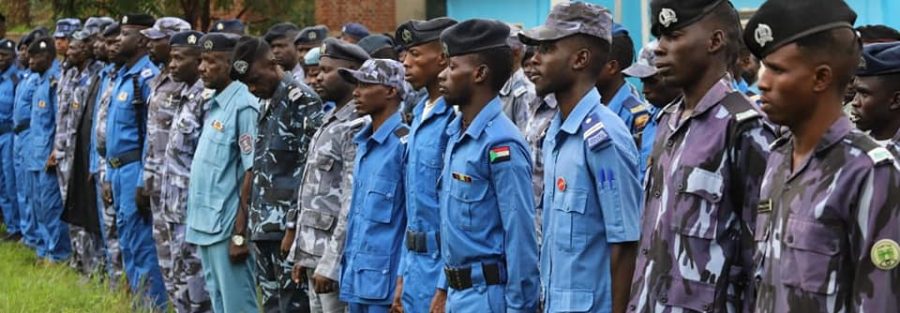
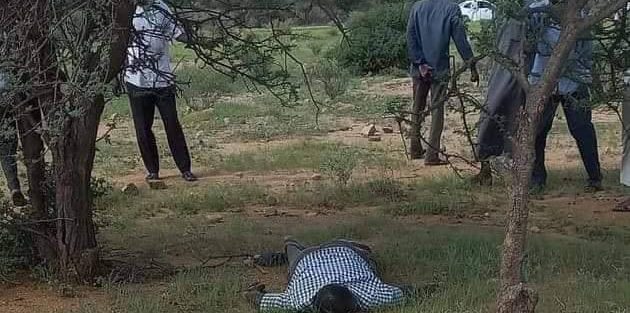
On Wednesday, May 6, 2020, at around 8 pm, 1 Sudanese Policeman was killed and 2 others seriously injured when a member of the Sudanese army attacked personnel at the Police station in Nyala.

According to sources and eyewitnesses, police patrols implementing lockdown orders imposed by the government of South Darfur proceeded to close the market and arrested a group of civilian men who had violated the emergency orders related to the COVID-19 pandemic.

The men were taken to the Nyala police station and during the completion of the reporting procedures, a member of the armed forces came to demand for the release of his brother, who was among those arrested.

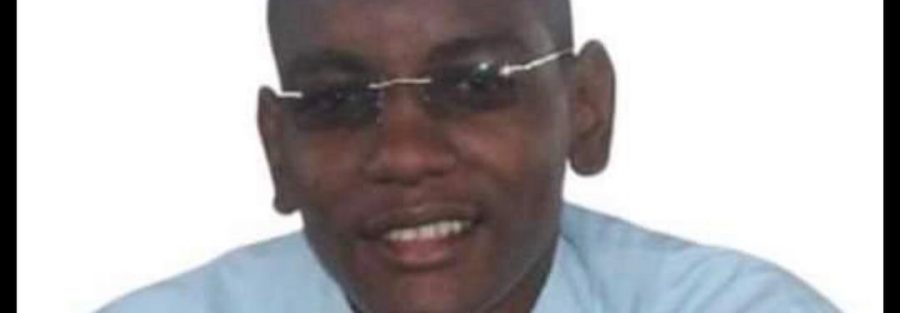
The man entered into an altercation with the police, pointed his rifle on those present and opened fire on them after some wrestled briefly with him for the gun that was being pointed at them. In the ensuing event, one Police Officer, Muhammad Yusef Abdullah was killed and two others Izzeldean Musa Ibrahim and Musa Issa Musa were seriously injured.

The casualties were transferred to the Nyala Police Hospital for an autopsy to be performed on the dead officer and treatment of the two injured, following which a report would be filed against to the perpetrator. At the time of reporting, no information is yet available regarding the arrest of the culprit.

Sudan: middle ranking officer in army rape girl under 16 years old in the Tor local, Nertiti, Central Darfur, Zalingi:

On April 22, 2020, A Sudanese army officer allegedly gun raped a 16 years old girl in the Tor local area, Nertiti, Central Darfur Zalingi State.

Nazar Mohammed Adam is the suspected person. He is 32 years. He is a part of the 16 brigade of the Sudanese army based in Kass locality in South Darfur Nyala.

The facts:

The victim (A.M.A) 16 years old. According to eyewitness the incident approximately occurred at 5 pm. She was sent to the local market to buy some food in her way back home she saw a person wearing a military uniform following her. He tried to call her she didn’t stop until she reached her family home, but none was around in the house. He followed her inside the house and threatened her with a pistol and raped her took place over one hour on time  . Some neighbors heard the noise and cries then they ran and found her already raped.

The neighbors said that they went to inform the army commander. They also confirmed that they reported the incident to the police in Nertiti. They filed the case under the number «189» and the Sudanese criminal code.

The victim was transferred to the Nertiti Hospital for further treatment. The army arrested the alleged perpetrator handed him over to the police in Nertiti central Darfur, Zalingi.

Given the stigma that the rape victims suffer, some women and girls don’t come up to tell their stories. The rape and gender-based violence very pervasive in Darfur and perpetrators continue to act without any deterrence.

Therefore, Darfur Network for monitoring and documentation calls upon the Transitional Sovereignty Council and Government of central Darfur State to intervene and put an end to these grave human rights violations.

We also need to call on UN special rapporteur on violence against women to provide more protection for these powerless people.

Rapid Support Force killed two civilians in Keyla South Darfur, West Sudan:

On Saturday, April 4, 2020, members of the Rapid Support Force committed a heinous crime against two unarmed civilians who were on their way to their homes in Keyla village in South Darfur. The assault resulted in the killing of two men, namely:

1- Ibrahim Omer Isaac, 56 years old;

2- Abdelrasoul Abdulla Hassan, 50 years old.

Both were married with children.

According to eyewitnesses, the incident took place around 5 pm when the men who were returning to the village after doing some shopping at the Al Malam market, were directly shot at by two armed men who were riding on a motorcycle belonging to the Rapid Support Forces. One the victims died on the spot and the other died whilst being transported to the Al Malam locality.

On the following day, Sunday, April, 5, 2020, a combined force of the Sudan Police and the Army, assisted by some civilians who witnessed the incident, tracked down the perpetrators who were then arrested and taken to the detention cells at the Al Malam locality Police Station.

The Darfur Network for Monitoring and Documentation Network (DNMD) commends the GoS security forces for their speedy action in apprehending the perpetrators and welcomes such steps which will send the right signal that there will be no impunity for criminal activities and acts of human rights violations.

DNMD, however, notes that such incidents remain a worrisome trend and signals increasing insecurity involving members of the Rapid Support Forces in various parts of Darfur. As a result, members of the civilian population remain in fear for their lives due to such incidents.

DNMD therefore calls upon the Transitional Sovereignty Council and Government of South Darfur State to:

  1. Take all measures to protect the civilians in Darfur, West Sudan;
  2. Denounce the actions by the RSF and reiterate that perpetrators of human rights violations will be held accountable.

DNMD also appeals to the United Nations and the African Union not to turn their backs on the people in Darfur who depend on peacekeepers for protection. The decision to close UNAMID would leave a vacuum in areas of protection of civilians which the GoS is not yet able and willing to fill under the current climate. DNMD notes the need for massive security sector reforms and the need to professionalize and build the capacity of the different security forces in order for them to execute their duties with professionalism and without bias or favor on the basis of ethnicity or tribal affiliations or for any other reasons. The time is ripe for the GoS to take concrete steps to build the trust of the people of Darfur in its security forces.

The Security Council today extended until 12 March 2021 the mandate of the Panel of Experts assisting the sanctions regime on Sudan, but some Council members urged the 15-member organ to consider lifting the restrictive measures.

Unanimously adopting resolution 2508 (2020) under Chapter VII of the Charter of the United Nations, it requested to the Panel to submit an interim report on its activities no later than 12 August 2020 to the Security Council Committee established pursuant to resolution 1591 (2005) concerning the Sudan.

Further, it requested the Panel to provide to the Council, after discussion with the Committee, a final report by 13 January 2021, including its findings and recommendations.

By other terms of the text, it expressed its intentions to regularly review the measures on Darfur in light of the evolving situation on the ground, and to establish clear, well identified, and measurable key benchmarks that could serve in guiding the Security Council to review measures on the Government of Sudan.

Following action, China’s delegate said he voted in favour of the resolution, adding, however, that regular review of the sanctions regime is necessary as the situation in Darfur is stable.  That region is in transition from peacekeeping to peacebuilding.  The Council should fully acknowledge the efforts of Sudan’s Government and carefully listen to them.  Sanctions are not an end in itself, he said, urging Council members to consider developing a road map towards lifting such measures.

The Russian Federation’s delegate said he also voted in favour, but argued that the 15-year-old sanctions on Sudan have fulfilled their objectives.  Noting positive trends towards normalization of the security situation, he said it is time to formulate a road map towards the lifting of sanctions.  Council members should find the courage to make a step in that direction.  Any Council sanctions regimes are subject to review, he added.

Sudan’s delegate said that the Council’s presidential statement in 2018 welcomed the continued improvement in Darfur’s security situation.  During a briefing on 12 December 2019 by Joanna Wronecka, the former Chair of the sanctions committee, after having visited Sudan, acknowledged that the security situation has largely normalized since the imposition of sanctions, encouraging the Committee and the Council to explore different options.  “Sanctions imposed on Sudan 15 years ago are no longer useful,” he said, urging the Council to reconsider the measures given that the situation in Darfur is improving day by day, the ceasefire is holding, and an agreement was signed between the Government and armed groups.  Regarding four listed individuals, one retired from active duty and one is detained.  The Government does not know the whereabouts of the other two, he added.  As terrorist organizations, such as Boko Haram and Islamic State of Iraq and the Levant (ISIL), remain active in the western border areas, Sudan’s security force and law enforcement capacities must be enhanced.  However, this is not possible without lifting sanctions, he emphasized.

The meeting began at 3:02 p.m. and ended at 3:16 p.m.

When life became unstable in Sudan’s Darfur region, Fatima (not her real name) escaped with her small children to a refugee camp in Eastern Chad. Though she found physical safety, forced displacement brought a new set of challenges.

Fatima rented a small plot of land to grow vegetables and raise goats to feed herself and her children. However, she quickly ran into problems. Infertile soil and irregular rainfall produced low yields of vegetables. There was not enough to survive on. She needed to learn better farming practices but didn’t know where to turn.

A State Department program — Self-Reliance and Peaceful Coexistence for Sudanese Refugees and Host Communities in Eastern Chad — in partnership with the Lutheran World Federation began in 2017 to reduce hunger among refugee communities and help people like Fatima learn better ways to farm in the arid region.

The program enables refugees and their communities to “become self-reliant and not depend on food aid,” said a representative of the Lutheran World Federation. “If the population is able to sustain their own livelihoods, they are most likely to stay in the places where they are” as opposed to looking for another place to start building their lives from scratch again.

While relationships among refugees and their host communities can be strained, the program fosters a sense of community through learning farming techniques.

The proof of the program’s success comes from stories across the region. In her case, Fatima has been able to buy her own land, send her children to school and buy new clothes with the money she makes from farming.

Pie chart showing amounts of humanitarian assistance by organization (State Dept./S. Gemeny Wilkinson)

On Friday, a group of Sudanese activists living in and the Netherlands and elsewhere in the diaspora presented an open letter to the Office of the Prosecutor of the International Criminal Court (ICC), as part of a campaign to have the deposed dictator Omar Al Bashir and his co-accused extradited to face the ICC in The Hague on charges of war crimes, genocide, and crimes against humanity.

The activists demonstrated outside the International Criminal Court before delivering the open letter by hand.

Al Bashir has already been convicted of currency offences, and given a custodial sentence by a Khartoum court, but as he still faces charges in Sudan, he remains incarcerated in the notorious Kober prison in Khartoum North, where so many of his opponents were detained and tortured during the 30 years of his repressive regime. Al Bashir was indicted for crimes including genocide nine years ago.

The Prosecutor of the International Criminal Court (ICC) told the UN Security Council last week during her briefing on Sudan that “concrete steps” must be taken towards ending impunity for atrocity crimes in Darfur,

In her 30th report to the UN Security Council, ICC prosecutor Fatou Bensouda, said that, “emboldened by positive political changes over the last six months, since the overthrow of former dictator Omar Al Bashir, that include a Constitutional Declaration, and a new Sovereign Council and Cabinet, she expressed her hope that “Sudan will honour its commitments to deliver justice” for the victims of civil conflict in the restive Darfur region, stretching back decades.

During the Darfur conflict between the government, their militiamen allies and rebel groups, which began in 2003, the UN estimated that around 300,000 were killed, and around 2.7 million forced from their homes.

Full text of the Open Letter to the Office of the Prosecutor of the International Criminal Court:

The institutions in Sudan have become too fragile to maintain peace and security or to administer justice impartially and independently because, during the 30 years of the Omar Al Bashir dictatorship, the regime infiltrated these institutions with their affiliates and cadres.

Despite that change and the aspiration for peace, democracy, and justice in Sudan, the millions of victims of International Human Rights and International Humanitarian Law violations have become more concerned about the possibility of administering justice.

For 30 long, dark years, the deposed regime that was widely known for its grave violations of International Human Rights and International Humanitarian Law destroyed almost everything valuable in the country. The former regime destroyed not only the socioeconomic values but extended to the entire judiciary system. Hence, it may not be impossible but will surely require many years of legal reforms before the Sudanese judiciary system is competent to try serious crimes such as crimes against humanity and war crimes or genocide.

The Sudanese transitional government seems inclined to opt for national prosecutions despite the obviously incompetent, unable, and partisan nature of the judiciary system. Although Sudan can rely on the complementarity principle to try Al Bashir and others indicted by the ICC, the question remains whether Sudan will be able and willing to do so. The International Commission of Inquiry on Darfur in 2005 and the ICC assessment proved that Sudan is unable and unwilling to address such serious crimes committed in Darfur.

The recent change in the country has brought hope for justice, peace, and prosperity. However, such hope is at stake with such powerful perpetrators as Haroun, Al Bashir, and others still at large. The recent violence in El Geneina in West Darfur is a perfect example of how easily the hope for justice and peace can be dissipated.

We appreciate the continuous efforts of the Court to bring those individuals responsible to trial, and to deliver justice to the victims who have been waiting for it for so long.

For these reasons, we call upon the Office of the Prosecutor to ensure that Al Bashir and others indicted by the ICC stand trial at the ICC. The prosecutor should request Sudan’s new interim government to hand over those responsible for the crimes committed in Darfur, and other regions in Sudan, in particular, those indicted by the Court.

Signatories:

  1. Dr Iman Ahmed, human rights activists, Consultant, World Health Organization.
  2. Dr Bakry M. Elmedni, assistant professor in the MPA Program in the School of Business, Public Administration and Information Sciences.
  3. Professor Sharif Harir, a lecturer, Researcher and Writer;
  4. Adeep Abdelrahman, SUDO;
  5. Mohy Eldeen Omer, Program Officer at National Democratic Institute (NDI);
  6. Barcai Abdel- Karim President End-Impunity Organization;
  7. Mohammed Abdelkriam, a lawyer and human rights defender;
  8. El Sadig Mustafa Zakaria, Darfur Bar association;
  9. Mohammed Adam Hassan, Darfur Network for Monitoring and Documentation (DNMD)
  10. Ibrahim Hamoda, Journalist;
  11. Fethy .Lawyer head of Phanaar Organisation;
  12. Abdulaziz Hussein Ahmed hamad;
  13. Mohammed El Gizoly Adam/ Human rights legal researcher;
  14. Abdelhadi Abbaker, Activists and human rights defender;
  15. Osman A Jami Secretary General of End Impunity Organization- Khartoum- Sudan;
  16. Afraa Yahia Daffalla Adam, activists and women rights advocate;
  17. Isaad Mohamedani, activist, former head of Darfur Association in the Netherlands, and women rights advocate;
  18. Ahmad Osman;
  19. Mohamed Khalil, activist;
  20. Mudaw Abubakar, Activist;
  21. Khalid Abdalh, Journalist and a former Darfur association in the Netherlands;
  22. Yousif Ibrahim Fasher;
  23. Abdel Rahman Adam Abdel Rahman, Entrepreneur and Peace Activist;
  24. Mohammed Abu Abdallah, Political activist;
  25. Rashid Almohammed, activist;
  26. Jamaleldeen Mohamed Adam;
  27. Ahmed Guma, lawyer & human rights defender;
  28. Abdlmajed Bahr, activist);
  29. Mohamed Ibrahim;
  30. Nejmaldin Ahmed Yacoub;
  31. Ahmed Adam;
  32. Darasalam Abdulla;
  33. Adam Idris Yahya;
  34. Yahya ishak ismeal;
  35. Ismail Motasam;
  36. Adma Adam Mohamed;
  37. Zakia Yousif;
  38. Ibrahim Adam Bashir;
  39. Ali Ahmed;
  40. Ismail Motasam;
  41. Sadam Adam Omar;
  42. Adma Adam Mohamed;
  43. Gmal Zakria, Human rights activist;
  44. Ahmed Mohamed Idris;
  45. Issam ahmed saleh;
  46. Yasir Khalil;
  47. Sinan Abdulrhman;
  48. Alsadiq Mohieldeen Ibrahem;
  49. Hala El-bushari.;
  50. Mohammed Abu ABDALLAH, Political activist;
  51. Rashid Almohammed, activist;
  52. Musab Shaib Zeinelabdeen ,Case manager, and human rights activist- Projekte resettlement.de Deutschland;
  53. Bella Kodi, SPLM-N;
  54. Muhammad Ali Muhammadu, Journalist;
  55. Abdul Rahman Osman Muhammad, researcher and university lecturer;
  56. Abduerhman A H Deiges Secretary General of the Association of Darfur in Norway;
  57. Hassan Abdul Karim Abdullah, political activist;
  58. Mahmoud Mohamed Korina, Political activist;
  59. Jamal Abdulrahman Saeed. Activist in the field of peace and human rights.;
  60. Munir Muhammad Suleiman, Information Technology Engineer;
  61. Salah Mohamed Suleiman, Engineer;
  62. Hassan Ishaq Ahmed, journalist and writer;
  63. Moatasem Hamdan;
  64. Ammar Najmuddin Hussain, human rights activist;
  65. Jaafar Al-Sibki Ibrahim, a member of the International Federation of Journalists;
  66. Mustafa Tambor, political activist;
  67. Abdel Razek Mastour Mohamed, Sudanese citizen from Darfur;
  68. Talal al-Junaid, Activist;
  69. Mostafa Mokhtar Mohamed, Vice-President of the Duane Organization in France, a human rights activist;
  70. Awatef Ahmed Ishaq – activist and human rights defender – journalist – women against violence, women of change group;
  71. Taj Alsir Hussain is a journalist and political activist.;
  72. Mustafa Sri Soliman UK – Manchester Journalist;
  73. Yasir Adam;
  74. Jamal Alnor, Activist;

75- Mohammed Salih Abdallah Yasin Journalist;

76- Hmadi Musa Abdallah;

77- Yasin Adam Ahmed, Activist;

78- Mohammed Abdulrahman, Activist;

79- Eisa Mustafa , Former Chairperson Darfur Union, Netherlands,;

80-n Alhaj Altom, Human rights defender;

81- Ahmed Eisa Ano, ACTIVIST;

82- Faisal Adam Suliman, Activist;

83- Hamid Hajer , Politician;

84- Ahmed Siraj , Lawyer;

85- Dr Ibrahim Mohammed, lecturer;

86- Jamal Alzain Kabashi, Activist;

87- Bakhit Hamid Basher, Politician;

88- Salih Mohammed , Activist;

89- Siddig Fadol, Chairperson of the Nubian Club; the Netherlands;

90- Alsadig Khamis, member of the Revolution Front;

91- Male Awad, Activist;

92- Najim Krkor, Activist, Israel;

93- Elyas Hussin, Teacher, Kalma Camp;

94- Jamal Idriss, Activist;

95- Laila abdalla, Director of Hawa Organisation,;

96- Sadam Adam , Activist;

97- Masour Ahmed , Activist;

98- Alsadig Musa, Activist;

99- Abelslam Babiker, Activist,;

100- Mohammed Abdallah Anas, Activist, Kenya,;

101- Maajid Ismail, Activist;

102- Nagmeldin Haron, Activist;

103- Niemat Abdo, Member of women for Peace and Security;

104- Isam Taha, member of Sudanese Communist Party,;

105- Slah Idriss Omer;

106- Abuhurira Abdelrahman, HRDs;

107- Muaawia Ibrahim, Activist;

108- Anwar Suliman, Activist;

109- Abdulaziz Mokhtar, Lecurer, South Africa,;

110- Faisal Elbagir, journalist and Human Rights Defender,;

111- Tagwa Ahmed

Darfur Network for Monitoring and Documentation, appeal to UNAMID in Darfur west Sudan For respond to protection civilians and IDPs because, will be large crisis happening against of human rights violations in Darfur region.

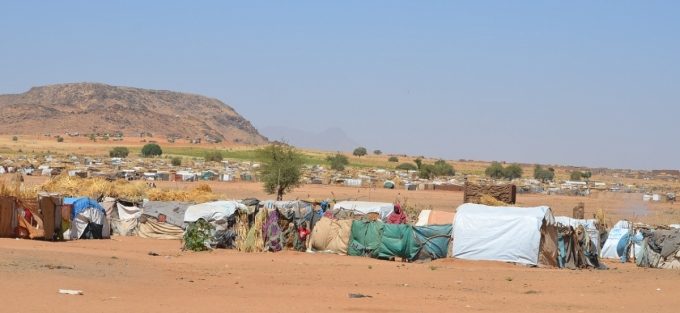
Two hundred people have been displace including women, children and elderly in Manawashi locality, south Darfur state from Marshing camp IDPs and they are fearful threat and attack them by Janjaweed militia and the rapid support force and the transitional government has not yet taken any steps to protect civilians from attack unto now.

24-25 January 2020 an enormous of IDPs have been displaced in Camp Marching up to now, they continue to move to Manawashi locality and the city of Nyala, South Darfur state.

 This is in the threat of armed militias who were said to have dozens of vehicles to attack the camp.  , Which civilians said, frightening them from the repetition of the attack that occurred in the Kryandiq camp for the displaced in Al Geneina west Darfur happen in a previous month killed more than 80 civilians and injured 100 approximately.

During displaced they are two elderly women who died due to the cold winter and exhaustion.

 The citizens of the city of Marching, especially those who have been displaced, have been suffering for four days ago for fear of an attack by armed militias who were killed have reached eight victims and more than forty wounded now in hospital of Nyala South Darfur.

The Ministry of Industry and Trade in Sudan has announced new measures to control and monitor the distribution of flour. The ministry acknowledges that 25 per cent of the subsidised flour ration – equal to 25,000 sacks a day – are being ‘leaked’.

In a press conference on Thursday, the Undersecretary of the Ministry of Industry, Mohamed Abdallah warned all bakery owners or agent distributors who may be involved in the trafficking of flour that any agent distributor who fails to distribute the ration given to him will be replaced.

He added, “we will appoint qualified people to distribute the flour. Anyone who manipulates or is proved to be involved in leaking flour shall face the punishment of five years imprisonment under the consumer’s protection laws.”

Abdallah explained that the ministry has established offices in the capital and all other states to control flour and the markets. He added that they are going to strengthen the laws that regulate trade and cooperation. “The ministry will enact new laws to control the central markets, registering the exporters, and establishing central rooms to distribute the subsidised flour,” he said.

The director of market supervision at the ministry, Hasan Ibnouf confirmed the leaking of 25 per cent of the subsidised flour. Ibnouf also acknowledged the existence of abuses in the weights and specifications of the pieces of bread. “We will design a form to collect information regarding the distribution, bakeries, and agent distributors so that we can take measures to control the distributions through electronic and field monitoring.”

Kamal Hammad, a worker in one of the bakeries told Radio Dabanga that some bakeries use less than 15 sacks and hide the rest. He also explained that there are people who have flour rations and do not have bakeries at all. “The weight of a piece bread does not exceed 30 grams,” he said.

Last week, Prime Minister Abdallah Hamdok said that there is now an abundance of flour and fuel in the country, with sufficient stocks to cover the country’s needs for more than a month. He promised to overcome the logistical and distribution crisis in the coming weeks, stating that the government has achieved success in providing cash.

The Sudanese Human Rights and Development Organisation (HUDO) has called for measures to protect freedom of religion, and an investigation into the torching of three churches twice in less than a month in Bout, Blue Nile state.

The Sudan Internal, Catholic and Orthodox churches in different districts in Bout were torched on December 28, 2019. The arsonists have not been identified, and according to HUDO, the police did not investigate the arson.

Church members managed to rebuild the three churches with local materials. On the evening of January 16, the churches were torched a second time. “Again, the case was reported to the police, and again, no further steps were taken,” HUDO claims.

HUDO demands that the government respect its international obligations towards its citizens, takes immediate action to protect the constitutional rights of the affected citizens, and conducts an urgent investigation.

HUDO also wants the government to ensure that the chiefs of the Bout police are held accountable for not taking any measures to prevent the arson and protect the freedom of religion of the people in Bout.

The UN Humanitarian Coordinator in Sudan, Gwi-Yeop Son, has denounced the recent attack in Abyei that left 32 people dead, 25 others injured, three children missing and 19 houses burned.

“I condemn this attack and call upon all parties and stakeholders to refrain from any acts that can result in the loss of lives, increase tensions and chances of violence,” Ms. Son said. 

According to the UN Interim Security Force for Abyei (UNISFA), armed men attacked the village of Kolom, about 9km northwest of the Abyei town, in the early hours of 22 January. 

The humanitarian organizations on the ground are providing healthcare assistance, including emergency surgical operations, to the affected people.

The head of South Sudan administered Abyei, Jook, accused the Sudanese army and militia from the Misseriya tribe, supported by the Popular Defense Forces, of carrying out the attack on the village.

“The attack led to the killing of 32 people, wounded 24 others, 15 children missing, and 22 houses torched,” He added.

In 2020, the Humanitarian Response Plan partners aim to provide 200,000 people in the Abyei area with humanitarian assistance.

For his part, the official spokesman of the Sudanese Sovereign Council, Mohamed Al-Faki Suleiman, blamed the United Nations Interim Security Force for Abyei (UNISFA) for the deterioration of security conditions in the area .

“The Transitional Council has accepted the resignation of the Abyei Administration Chief , Ahmed Saleh Salouha,  while consultation with all parties is ongoing to appoint a new leadership so that it can monitor the situation on the ground” said Al Faki.