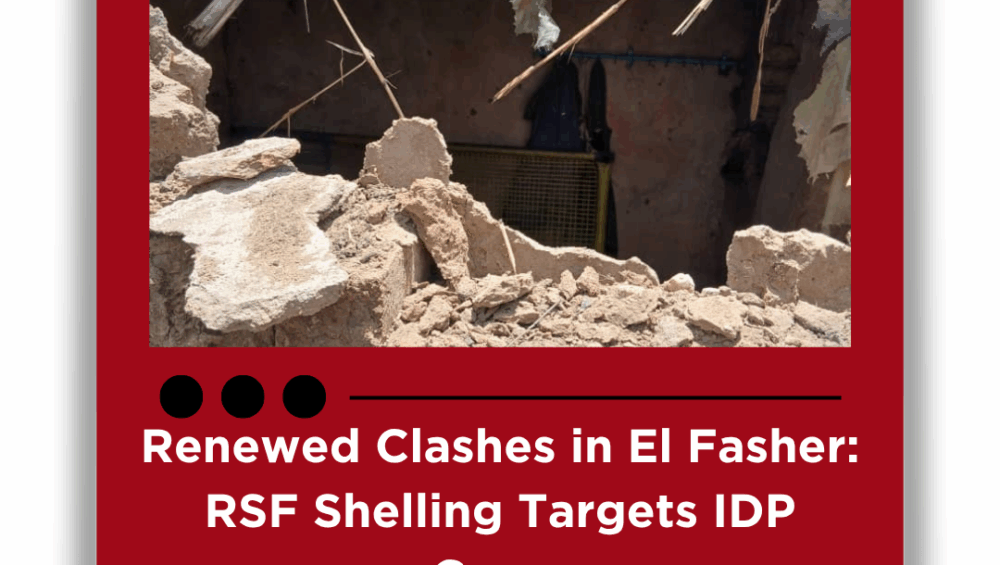
On the morning of August 2, 2025, renewed clashes broke out between the Sudanese Armed Forces (SAF) and the Rapid Support Forces (RSF) on the eastern outskirts of El Fasher.
Artillery Strikes on Nafasha IDP Camp
The RSF launched a focused artillery attack. The shells targeted the Nafasha camp for Internally Displaced Persons (IDPs) and nearby civilian homes.
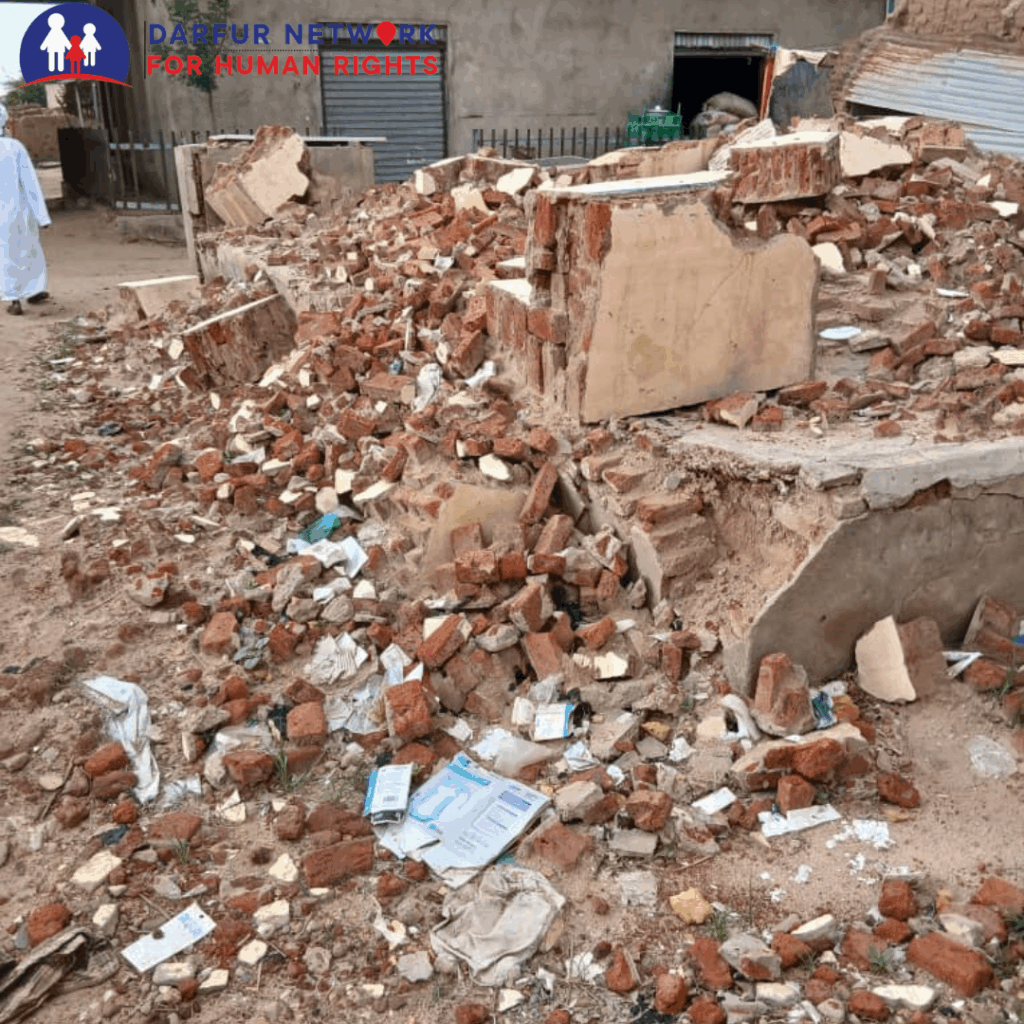
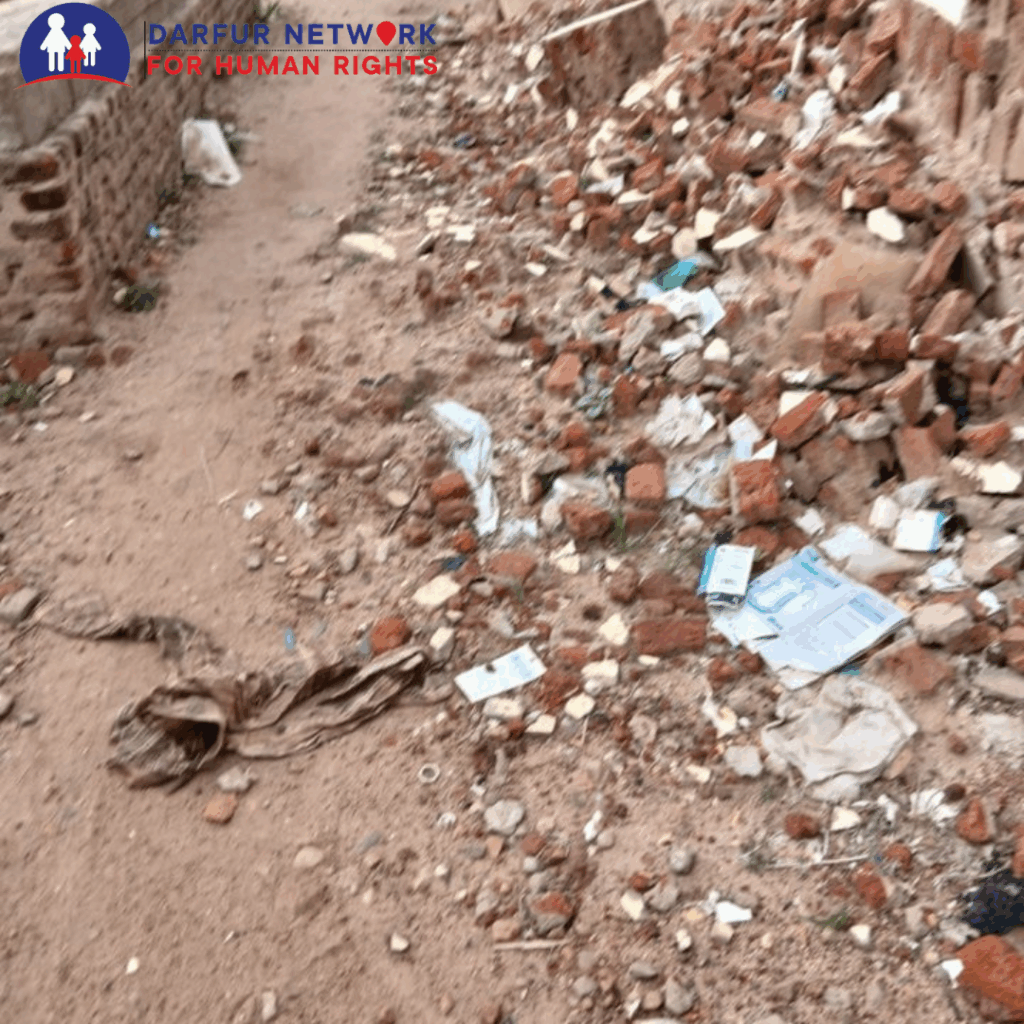
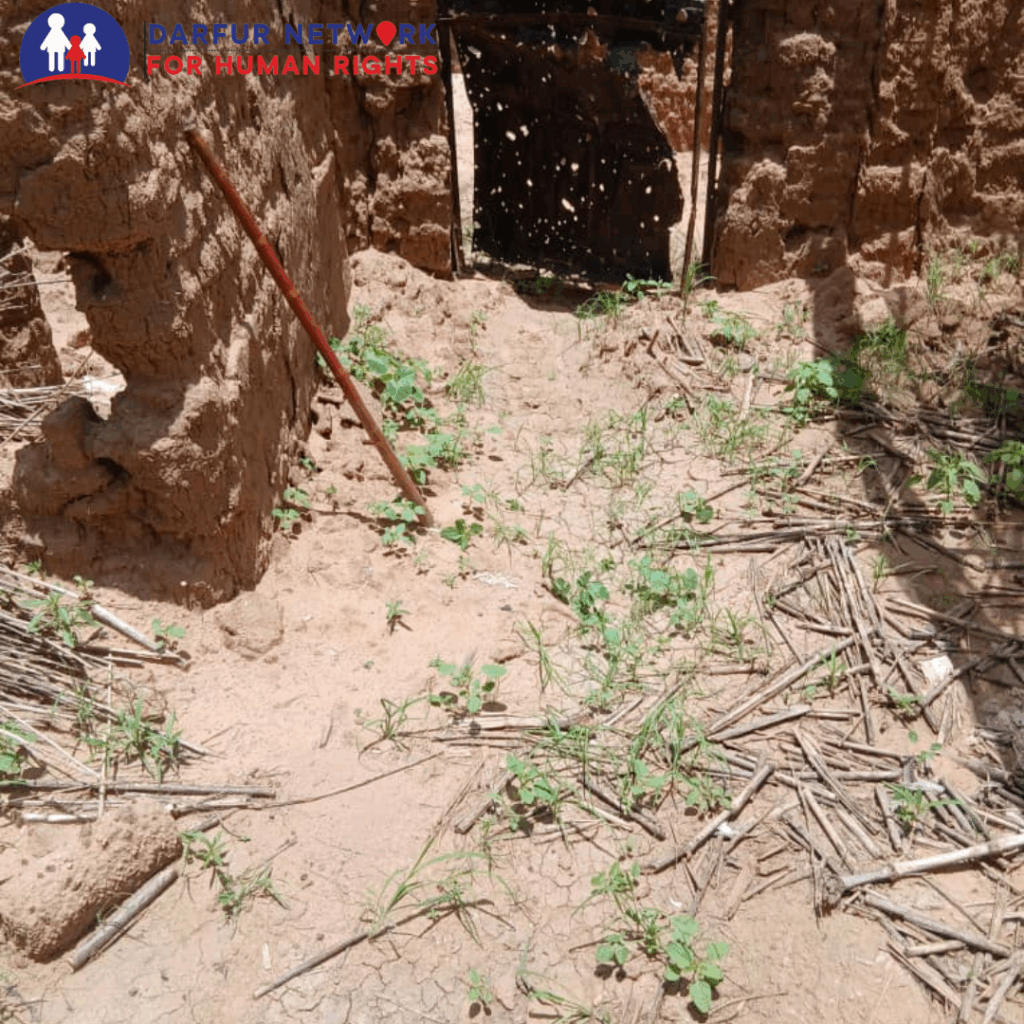
Civilian Homes Destroyed
The shelling destroyed multiple homes within the Nafasha camp. We can confirm the destruction of residences belonging to:
- Abdelkarim Mohammed Ahmed Abdalla, Block 1, Square 2
- Ahmed Mohammadin Mohammed, Block 2, Square 2
- Mohammed Ahmed Saead, Block 2, Square 2
- Adam Hamid Suliman, Block 1, Square 2
An eyewitness confirmed these four homes were immediate neighbors. They stated that all four families had fled to Tawila about a month ago due to worsening security. While the families were safe, the attack completely destroyed their homes. The threat to civilians who remain in the camp is severe.
A Deteriorating Situation
The situation in El Fasher is highly volatile and worsening rapidly. Ongoing artillery fire continues to endanger civilians in and around the Nafasha camp.
Severe restrictions on humanitarian agencies are hindering emergency response and aid delivery. This increases the psychological distress and displacement risk for all residents who live in constant fear.
An Urgent Call for Action
The events in El Fasher demand an immediate international response. We call for the following actions:
1. Deploy Humanitarian Aid Emergency assessment teams must deploy immediately. They need to evaluate the damage, identify survivors, and deliver essential aid. This includes shelter, medical care, and protection services.
2. Condemn IHL Violations Global human rights organizations must urgently condemn the RSF’s shelling of a civilian area. These attacks are a likely violation of International Humanitarian Law (IHL).
3. Document Evidence for Accountability A coordinated effort is needed to document and preserve forensic evidence from the shelling. This evidence is critical for pursuing legal accountability under International Human Rights Law (IHRL) and relevant war crimes statutes.