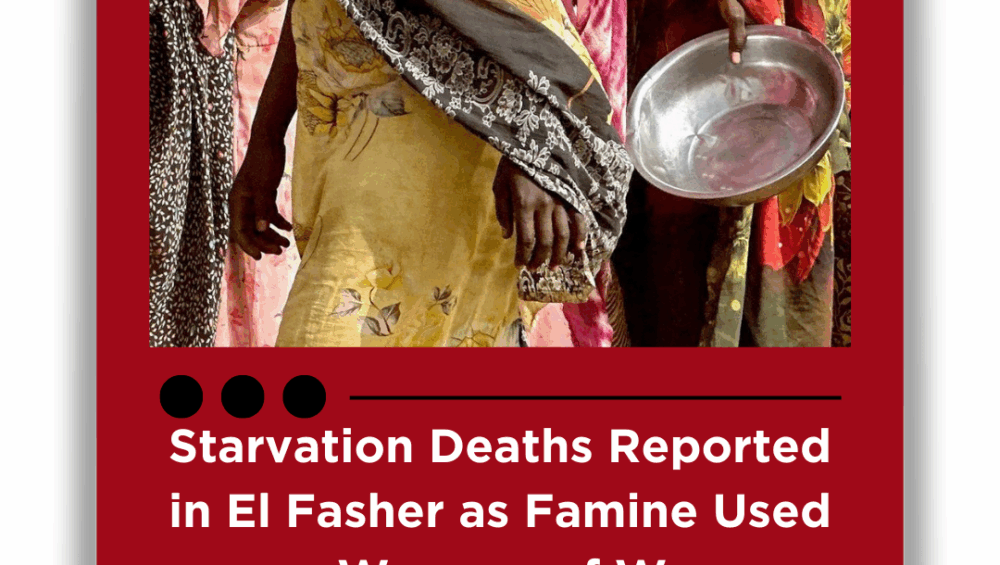
The humanitarian situation in Abu Shouk camp, near El Fasher, has reached a critical point following reports that an entire family including two elderly women, a mother, and three young children died after consuming imbaz, the fibrous waste left after peanut oil extraction.
The deaths, confirmed by field updates, were discovered only after a neighbor reported the incident. It is one of several such cases emerging quietly across the city, where hunger has taken hold amid ongoing siege conditions.
For months, Rapid Support Forces (RSF) have maintained a blockade around El Fasher, cutting off major supply routes and encircling the city with trenches. As food, medicine, and clean water run out, thousands of displaced civilians in Abu Shouk and nearby camps now rely on foraged or inedible substitutes to survive.
Despite warnings from humanitarian agencies, a formal famine declaration has not been issued. However, observers say the evidence on the ground, malnutrition, silent deaths, and complete breakdown of food systems meets the threshold for famine.
The Darfur Network for Human Rights (DNHR) views the current crisis as part of a broader pattern in which starvation is being systematically used as a weapon of war. The deliberate obstruction of aid, the isolation of population centers, and the destruction of basic services point to intentional tactics aimed at weakening and punishing civilian populations.
Abu Shouk is one of several camps that have experienced repeated shelling, forced displacement, and now prolonged hunger. Local medical facilities are overwhelmed, with remaining hospitals operating under severe shortages and under threat of attack.
The Darfur Network for Human Rights (DNHR) is gravely concerned by the escalating risk of mass starvation and reiterates its call for unimpeded humanitarian access to all displacement sites and urban centers affected by the conflict.
DNHR warns that famine-related deaths are likely to rise sharply unless urgent action is taken to restore aid corridors, ensure medical access, and protect civilian infrastructure from further attacks.