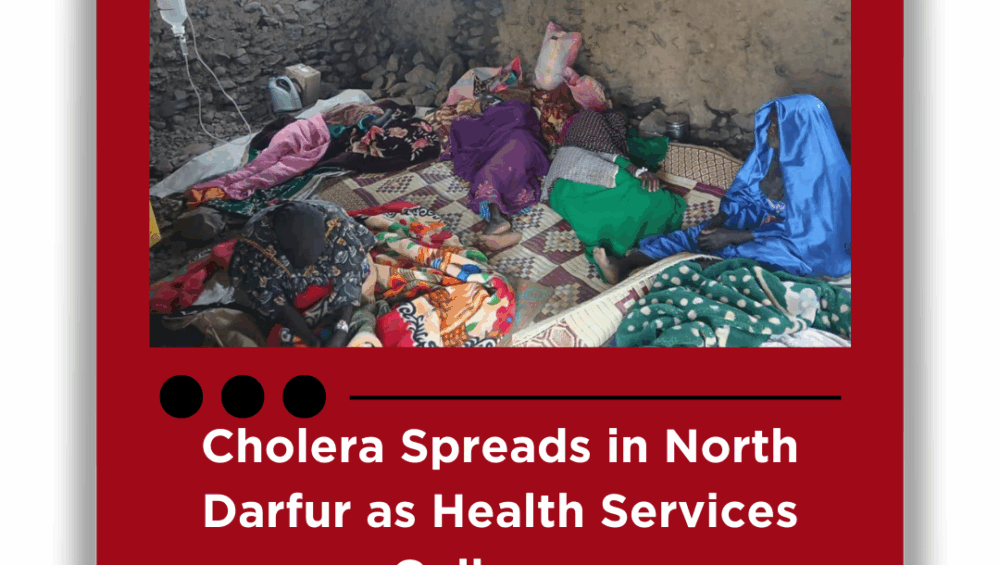
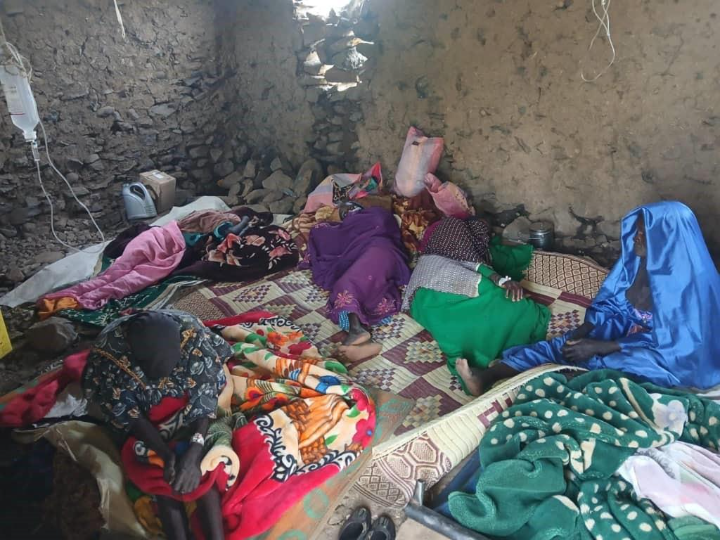
A cholera outbreak is spreading in Tabasa, North Darfur, where residents are facing a total collapse of local health infrastructure. The area’s only clinic is non-functional, lacking even the most basic medicines. There are no medical staff, no supplies, and no system in place to contain the spread of disease.
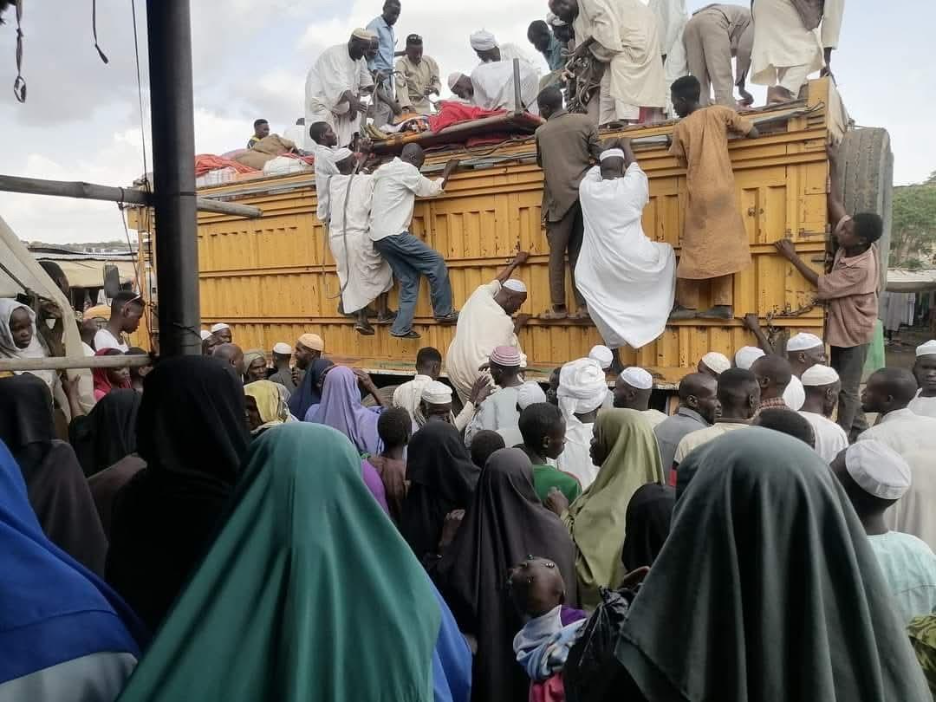
With no treatment available locally, patients are being transported in open trucks to Tawila, the nearest location with a functioning health facility. These journeys are long, unprotected, and medically unsafe, placing already vulnerable people at even greater risk.
Tabasa is currently under the control of the Sudan Liberation Movement (SLM), which, as the de facto authority, bears responsibility under international humanitarian and human rights law to ensure the safety and medical welfare of civilians. The failure to facilitate immediate access to healthcare and to ensure safe, dignified treatment pathways is not simply a matter of resource shortage, it is a violation of the right to health and the right to life.
DNHR is deeply concerned that the situation in Tabasa mirrors a broader pattern across conflict-affected regions of Sudan: communities are left to face epidemics without support, while the systems meant to protect them are either collapsing or deliberately withheld. Cholera is a treatable disease. Preventable deaths in 2025 represent not just a public health failure but a grave injustice.
We call for the urgent delivery of cholera treatment supplies to Tabasa, immediate access for humanitarian responders, and the provision of secure, medically appropriate transportation for those in need. The longer these gaps persist, the more lives will be lost, needlessly and in violation of international law.