KEY FACTS AT A GLANCE
- El Fasher fell after 560-day siege on 26 October 2025
- 655,000 displaced to Tawila alone — 98% lack shelter
- Mass graves being dug to conceal scale of killings
- 30% of children under five acutely malnourished
- UN needs $500M urgently — has received less than 1/3 of required funds
Darfur is entering one of the darkest chapters in its 20-year history of violence. The fall of El Fasher on 26 October 2025 — after nearly 560 days of siege — has triggered a wave of killings, mass displacement, sexual violence, and starvation that UN officials describe as “terrifying,” “unprecedented,” and “beyond the capacity of humanitarians to respond.”
To understand this crisis — and why the world cannot afford to ignore it — here is a clear, comprehensive guide based on DNHR investigations, survivor accounts, satellite analysis, and statements from the United Nations.
How Darfur Reached This Breaking Point
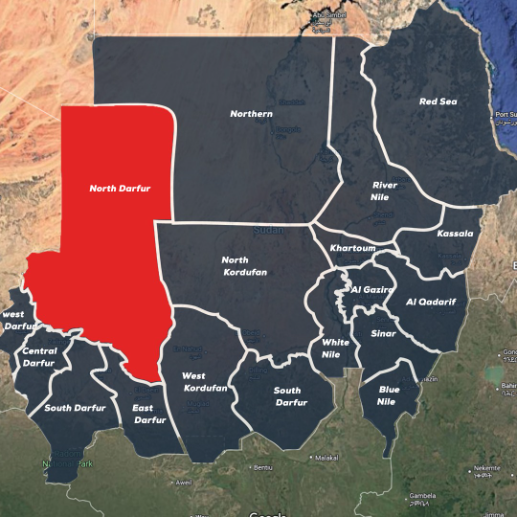
Sudan’s war erupted in April 2023, when a power struggle between the Rapid Support Forces (RSF) and the Sudanese Armed Forces (SAF) collapsed an already fragile political transition. Darfur, still scarred by the genocide that began in 2003, became one of the main battlegrounds.
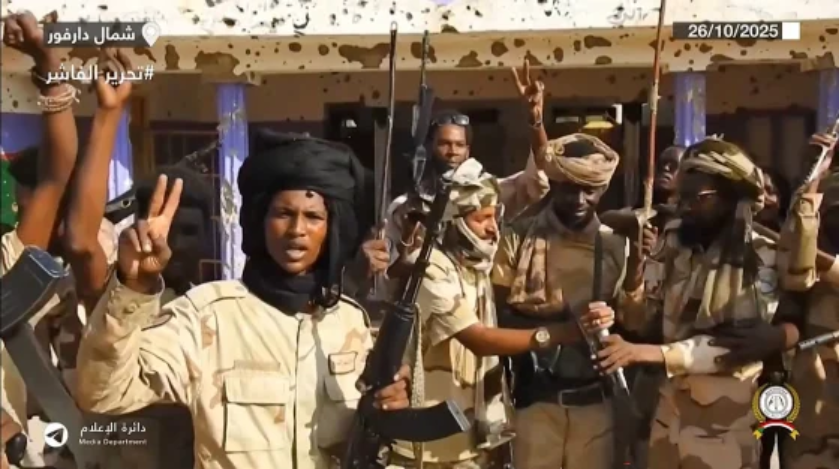
The RSF — whose origins lie in the Janjaweed militias responsible for ethnic cleansing — expanded rapidly across the region. By late 2025, almost all major towns in Darfur had fallen, leaving El Fasher as the last significant city held by the army.
The 560-Day Siege
For 18 months, El Fasher was suffocated. Food, medicine, and aid were deliberately blocked. Markets were destroyed. Hospitals collapsed. Residents survived on livestock feed or whatever they could forage. Then, in late October, the RSF stormed the city.
El Fasher After the Takeover: A City of Atrocities
Within hours of the RSF capturing El Fasher, civilians fleeing toward Tawila, Korma, Malit, and surrounding villages described scenes of horror. Satellite imagery and field reports reviewed by DNHR confirm their accounts.
Mass Graves: ‘They Are Cleaning Up the Massacre’
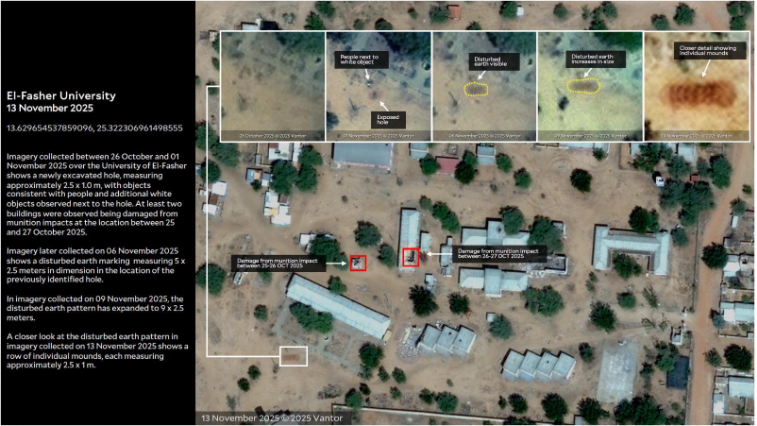
Investigators from Yale’s Humanitarian Research Lab have documented RSF units digging mass graves across El Fasher.
Nathaniel Raymond, the lab’s director, told Al Jazeera that RSF forces are collecting bodies throughout the city and burying them in large, concealed pits.
“They are cleaning up the massacre.”
Raymond described the pace of killings as so extreme that “more people could have died in 10 days than in two years of the war in Gaza.”
DNHR sources inside North Darfur have also reported multiple sites where RSF fighters forcibly transported bodies after executions and shelling. The systematic nature of this body disposal suggests a deliberate effort to hide the scale of atrocities.
The Patterns of Violence
Survivors and humanitarian observers have documented a horrifying consistency in the violence:
Summary Executions: Civilians shot at close range along escape routes and in their homes.
Sexual Violence as a Weapon: Rape used systematically, sexual slavery, women assaulted while fleeing. DNHR, UN Women, UNFPA, and IOM confirm this is not isolated — it is targeted, gendered warfare.
Forced Displacement: Entire families driven from their homes, children separated during chaos, people forced to walk for days while hiding from drones.
Starvation as a Weapon: The 560-day siege deliberately blocked food and medicine — forcing civilians to survive on livestock feed and boiled leaves. UN officials describe this as consistent with the use of starvation as a method of warfare, a potential war crime under international humanitarian law.
Extortion and Ransom: Civilians forced to pay millions just to escape or to retrieve bodies of loved ones.
What Civilians Endured While Fleeing
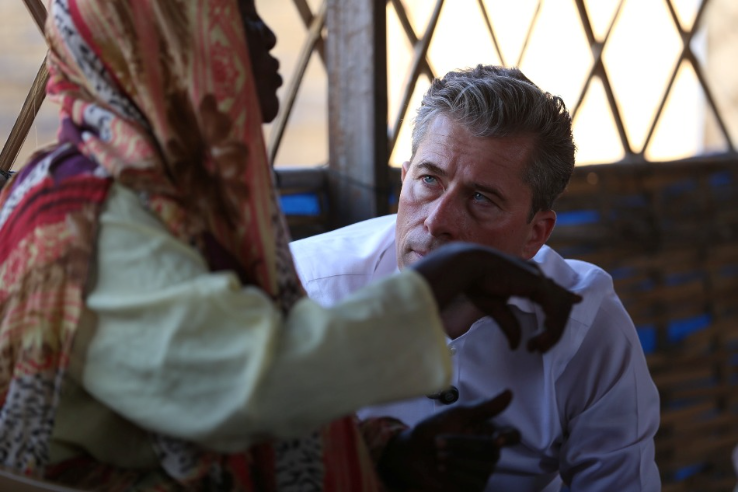
The United Nations Under-Secretary-General for Humanitarian Affairs, Tom Fletcher, visited Tawila on 15–16 November 2025. His findings were stark:
“I mean, it’s a horror show.”
Fletcher said survivors described rape, torture, extortion, and shootings “on sight” as people tried to flee El Fasher. Families walked for days. Children collapsed from hunger. People arrived with nothing but the clothes they wore.
Satellite images corroborate their accounts: bodies on roadsides, burned homes, and dense clusters of makeshift shelters where thousands arrived within days.
Tawila: A Town Overwhelmed
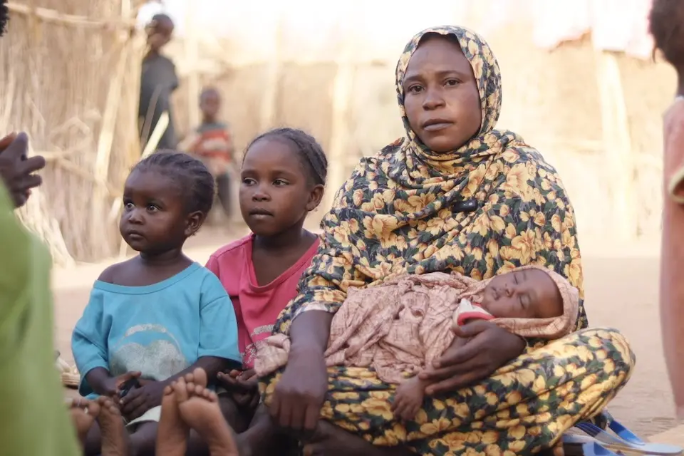
Tawila — previously a quiet rural area — now hosts 655,000 displaced people, most from El Fasher.
According to IOM and UNFPA:
- 98% of families lack basic items like blankets or mattresses
- Families are sleeping in the open
- 30% of children under five are acutely malnourished
- Food consumption is dangerously low in 86% of households
- Women and girls face heightened risks of violence
The UN’s humanitarian chief warns that the situation is deteriorating faster than aid agencies can respond.
The Toll on Women and Children
Women and girls bear the heaviest burden. DNHR and UN agencies have documented women giving birth in the open, children disappearing during attacks, mothers skipping meals so their children can survive, families sleeping without shelter, and girls exposed to violence, exploitation, and abuse on a massive scale.
These are not isolated incidents — they are part of a larger pattern of systematic, gendered violence that requires urgent international accountability.
A Humanitarian System on the Edge of Collapse
The United Nations says its Sudan humanitarian appeal has received less than one-third of required funds.
Fletcher confirmed the UN urgently needs $500 million for the next quarter, with another $350 million required if access improves. Currently, 600,000 people across Darfur and Kordofan are unreachable, and major operations may collapse without new funding.
He stressed that civilians “are not protected by statements” and urged countries with influence to “use it right now.”
Worsening Violence Across Darfur and Kordofan
The crisis extends far beyond El Fasher. Across Darfur and the Kordofans, civilians continue to report summary executions, sexual violence, drone strikes, village burnings, forced conscription, and the arrival of new armed groups preparing for fresh offensives.
The UN Human Rights Chief warned that “killings and destruction are increasing” and that both regions show “clear preparations for intensified hostilities.”
Who Is Enabling This?
Fletcher confirmed that UN teams passed through “many RSF-controlled areas and checkpoints” and that ensuring safe corridors to El Fasher is “an urgent priority.”
But the RSF’s capacity to wage this war does not exist in a vacuum. According to UN Panel of Experts reports, the RSF has received significant military and financial backing from external actors, notably the UAE. International investigators have documented weapons and support flowing through regional networks that sustain the RSF’s campaign.
Accountability must extend beyond combatants to those who supply, fund, and enable these atrocities.
The World’s Failure — And What Must Happen Now
The Director General of IOM, Amy Pope, said:
“The world has failed to protect them. We must not fail them again.”
DNHR echoes this warning. Darfur is facing famine, mass displacement, and systematic atrocities that require immediate, coordinated international action.
For Governments:
Impose arms embargoes on all parties and their suppliers. Pressure regional backers — including the UAE, which UN experts have documented as a key RSF supporter — to cease military support. Use diplomatic leverage to enforce humanitarian corridors.
For the UN Security Council:
Authorize independent investigations into mass atrocities. Deploy protection mechanisms for civilians. Enforce accountability for systematic sexual violence, forced starvation, and mass killings.
For Donors:
The UN needs $500 million immediately. Without it, operations collapse and famine becomes inevitable. This is not charity — it is an obligation under international humanitarian law.
For the Public:
Share survivor testimonies. Demand your representatives’ act. Contact your elected officials. Darfur cannot survive another cycle of international abandonment.
El Fasher is not an isolated tragedy — it is a symptom of a war that has spiraled far beyond what local communities can endure. If the world continues to look away, Darfur will slip into an irreversible catastrophe.