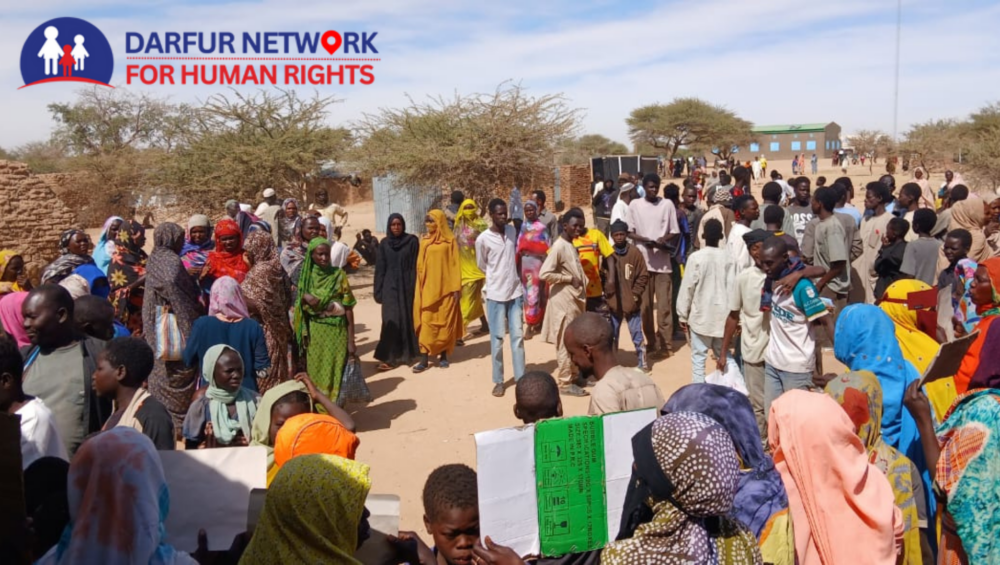
Sudanese refugees in eastern Chad are facing a severe humanitarian crisis. On Monday, hundreds of refugees in Marah camp took to the streets demanding food, water, shelter, and medical care. Testimonies from Qaga camp reveal the depth of deprivation affecting vulnerable populations, with refugees describing conditions so severe that hope itself has become a casualty.
When Refugees Protest for Survival
The protests in Marah camp on December 15 represent a critical moment. When refugees—people who have already fled violence, crossed international borders, and lost everything—must take to the streets to demand food and water, it exposes a humanitarian crisis of severe proportions.
These are not political demonstrations. They are cries for survival from people who fled genocide in Darfur and found themselves facing starvation in displacement.
“We Have Nothing”
Mariam Hussein Mohammed fled the village of Moli in West Darfur and now lives in Qaga camp. She is an orphan with a disability affecting her legs, leaving her unable to support herself. Her testimony provides a stark illustration of conditions in Chad’s refugee camps:
“We are refugees from West Darfur. In the village of Moli, we have nothing, no food, and no one to provide for us. We are orphans, and even the aid provided to the vulnerable is not enough. But God will help us. I also have a problem with my legs, which are very tired, and I have no means of supporting myself. People in the camps have lost all interest in life. We even have a problem with drinking water.”
Mariam’s situation reflects the intersecting vulnerabilities facing many refugees: she is an orphan without family support, a person with a disability without specialized care, and a refugee without access to basic necessities. Even aid designated for the most vulnerable populations is insufficient.
The Crisis of Hope
When Mariam says “people in the camps have lost all interest in life,” she describes something more profound than physical deprivation. This is psychological collapse born from prolonged suffering without visible improvement, without pathways to dignity or self-sufficiency, and without belief that conditions will change.
Loss of hope is both a mental health crisis and an indicator of humanitarian response failure. It reveals what happens when people who survived genocide face ongoing deprivation in displacement, feeling forgotten by the international community that promised them protection.
Who Are These Refugees?
The Sudanese refugees in eastern Chad fled systematic mass atrocities in West Darfur: mass killings in villages, sexual violence used as a weapon of war, complete destruction of homes and infrastructure, and ethnic-based targeting of entire communities.
They crossed into Chad seeking safety. What they found were camps where even drinking water is uncertain, where food distributions are inadequate, where medical care is limited, and where there are no opportunities for livelihood or self-sufficiency.
Chad’s Burden and the International Gap
Chad hosts over 600,000 Sudanese refugees despite being one of the world’s poorest countries. The country has demonstrated extraordinary generosity, but the scale of displacement has overwhelmed both local and international response capacity. As global attention shifts to other crises, Sudanese refugees risk being forgotten—but their needs have not diminished.
The humanitarian response faces critical gaps across all sectors. Food distributions are insufficient, leading to malnutrition. Water access is inadequate, creating health risks. Shelter materials are limited. Medical facilities lack supplies and specialized services. And there are no livelihood programs, leaving refugees entirely dependent on aid that doesn’t meet their needs.
Vulnerable populations face compounded risks: orphans without family support systems, people with disabilities without specialized care, women at risk of gender-based violence, older people with unmet health needs, and unaccompanied children separated from families.
DNHR Urgent Appeal
The Darfur Network for Human Rights issues an urgent appeal for immediate humanitarian intervention in eastern Chad’s refugee camps.
To German authorities and international donors: Increase humanitarian funding immediately. Support comprehensive programming addressing both emergency survival needs and longer-term pathways to dignity. Use diplomatic influence to mobilize sustained international attention. Ensure accountability for how commitments translate to ground-level impact.
To humanitarian organizations: Scale up emergency assistance in Marah, Qaga, and other camps immediately. Ensure reliable provision of food, water, shelter, and medical care. Implement specialized support for vulnerable populations including orphans, people with disabilities, women, and children. Provide psychosocial support for refugees experiencing trauma and despair. Create livelihood programs enabling self-sufficiency and dignity.
To the international community: Do not forget Sudanese refugees as attention shifts elsewhere. Honor protection commitments made under international law. Support both refugees and host communities in Chad. Recognize that localized crises—like protests for food and testimonies of lost hope—signal broader systemic failures requiring urgent response.
From Desperation to Dignity
The protests in Marah camp and testimonies from refugees like Mariam expose a humanitarian emergency that demands immediate action. These are people who fled the worst atrocities of our time and sought safety across borders. They deserve protection, assistance, and above all, hope.
When refugees must protest for food and water, when they say “people have lost all interest in life,” it represents a collective failure of international protection systems. The resources and capacity to respond exist. What is required is political will and immediate action.
Refugees in Chad cannot wait. Their needs are urgent. Their suffering is preventable. This is a humanitarian emergency.