
The United Nations Human Rights Council has adopted, without a vote, its first resolution focused specifically on El Obeid (A/HRC/62/L.48), the North Kordofan city facing an intensifying campaign of Rapid Support Forces (RSF) violence following 18 months of siege-like conditions. The resolution follows an emergency session convened after rights groups called on the Council to act early, in anticipation of harm to civilians rather than in response to it.
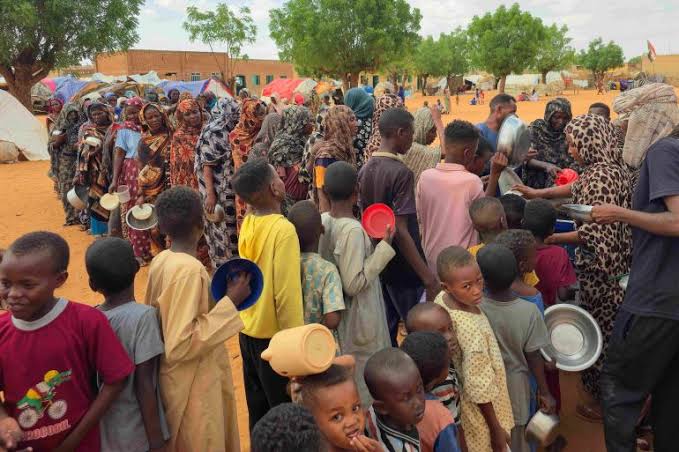
The Council strongly condemned the escalating violence committed by the RSF and affiliated forces in and around El Obeid, and expressed deep concern about the imminent risk of large-scale atrocities, including conflict-related sexual violence facing hundreds of thousands of civilians, children, and internally displaced persons in the area.
The UN Fact-Finding Mission for Sudan has separately reported a growing and apparently indiscriminate pattern of drone attacks in and around El Obeid, with hospitals, markets, schools, and residential areas among the sites struck, causing civilian casualties and disrupting essential services. DNHR notes that these reports carry echoes of the period preceding the RSF’s assault on El Fasher, an attack the same Fact-Finding Mission later found bore the hallmarks of genocide, underscoring why early attention to El Obeid matters.
What the resolution requests
The resolution requests the Office of the UN High Commissioner for Human Rights to present an oral update on the situation in and around El Obeid before the end of the Council’s sixty-third session. It also requests the independent international Fact-Finding Mission for Sudan to conduct, within its existing resources, an urgent inquiry into violations and abuses of international human rights and humanitarian law allegedly committed in and around El Obeid. The Fact-Finding Mission is encouraged to update the Human Rights Council during the interactive dialogue at its sixty-third session, and the General Assembly during its eighty-first session.
DNHR further welcomes the resolution’s earlier reference, during negotiations, to the Banjul Joint Declaration, which formalizes cooperation between the African Commission on Human and Peoples’ Rights and the Fact-Finding Mission, a meaningful step toward closer coordination between regional and international human rights mechanisms.
What comes next
DNHR sees this resolution as a meaningful step and continues to call for the international community to build on it: deploying a protection of civilians mechanism, expanding the existing arms embargo and ICC jurisdiction to cover all of Sudan, and broadening sanctions against those responsible for serious violations of international human rights and humanitarian law.
DNHR continues to monitor and document the situation in North Kordofan and will report further as the Fact-Finding Mission’s inquiry progresses.