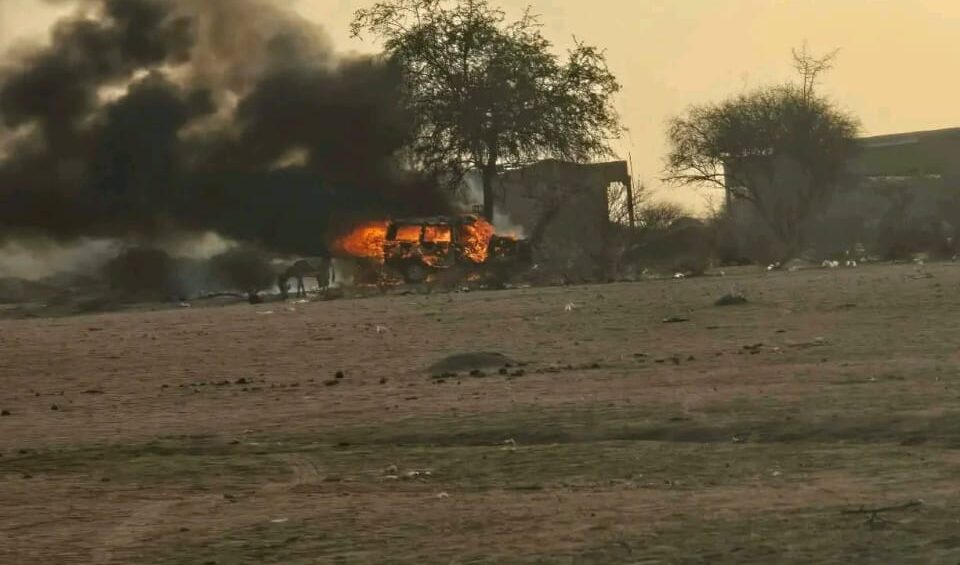
A drone attack reportedly carried out by the Rapid Support Forces (RSF) hit the Bamna border area between Sudan and Chad on Monday, 21 July 2026. The strikes hit three separate locations on both sides of the border.
Where the Strikes Hit
The attack struck Ander and Bamna inside Sudanese territory. It also hit a drinking water well west of Bamna and a site within Bamna on the Chadian side of the border. Field sources and eyewitnesses say the strikes targeted three vehicles. Two belonged to civilians, and one belonged to the Chadian local administration.
Casualties and Damage
The attack killed two civilians and injured seven others with varying degrees of severity. Several children were among the injured, particularly at the water well. Medical teams evacuated the wounded to Chadian territory for treatment. Three vehicles sustained damage, two civilian-owned and one belonging to the Chadian administration. Verification of the full extent of casualties and damage is still ongoing.
How the Attack Has Affected Civilians
The strikes caused widespread fear and panic among residents of border villages. Several families fled their homes as a result. Some moved toward Al-Wadi, while others crossed into Chad. A number of residents chose to stay in Bamna on the Sudanese side despite continuing security concerns.
The strike on the drinking water well has raised particular alarm. Local communities, especially women and children, depend on this water source for daily survival.
A Worsening Humanitarian Picture
Field information shows the incident has further weakened conditions in the border area. Insecurity and fear of new attacks have intensified. Civilian movement between border villages has been disrupted. The risk of internal displacement, and of families seeking refuge across the border in Chad, continues to grow. Access to essential services, particularly healthcare and safe drinking water, remains a serious concern.
This attack fits a broader pattern. Drone use has increased across the Sudan-Chad border region in recent months, causing civilian casualties and damaging property and infrastructure.
Urgent Needs on the Ground
DNHR’s field team has identified several priority needs. These include medical care for the injured, emergency assistance for displaced families, and access to safe water sources. Protection services and psychosocial support, particularly for women and children, are also urgently needed. Continued field monitoring will help track further needs and any new waves of displacement.
DNHR Position
DNHR calls for an independent, impartial, and transparent investigation into this attack. All parties must take necessary measures to protect civilians and civilian objects, including water sources, under international humanitarian law. Humanitarian access to affected areas must remain unhindered so aid can reach families quickly.
DNHR also calls for stronger monitoring of the humanitarian and security situation along the border. All parties to the conflict must comply with the principles of distinction, proportionality, and precaution to prevent further harm to civilians.
About DNHR
The Darfur Network for Human Rights (DNHR) documents human rights violations in Darfur and across Sudan. DNHR advocates for accountability and civilian protection through engagement with UN and African human rights mechanisms.