
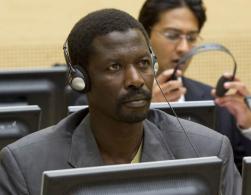
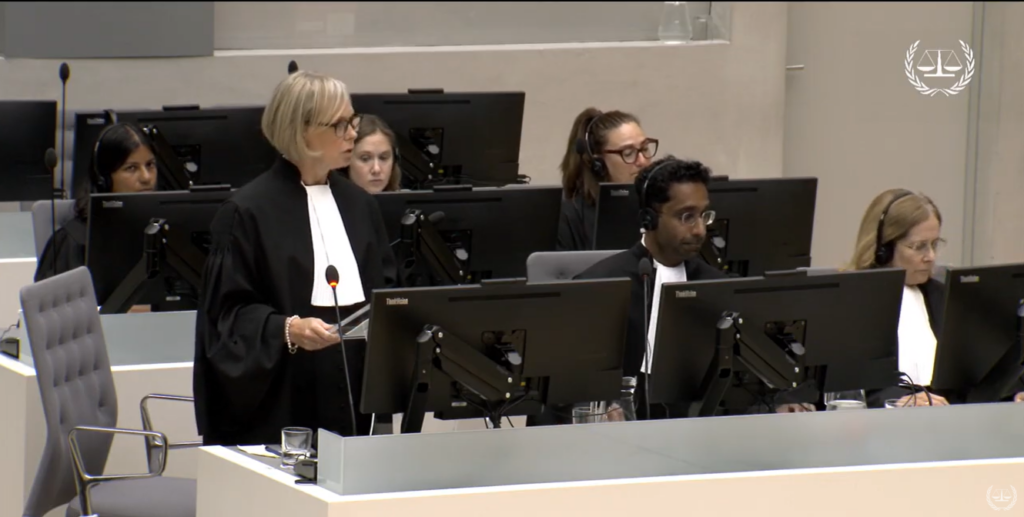
The International Criminal Court held a status conference on 21 July 2026 in the case of the Prosecutor v. Abdallah Banda Abakar Norain, during which the Office of the Prosecutor formally gave public notice that it is withdrawing the charges against Mr. Banda. Deputy Prosecutor Nazhat Shameem Khan’s office said the decision follows years of reassessment showing the evidence no longer supports a reasonable prospect of conviction.
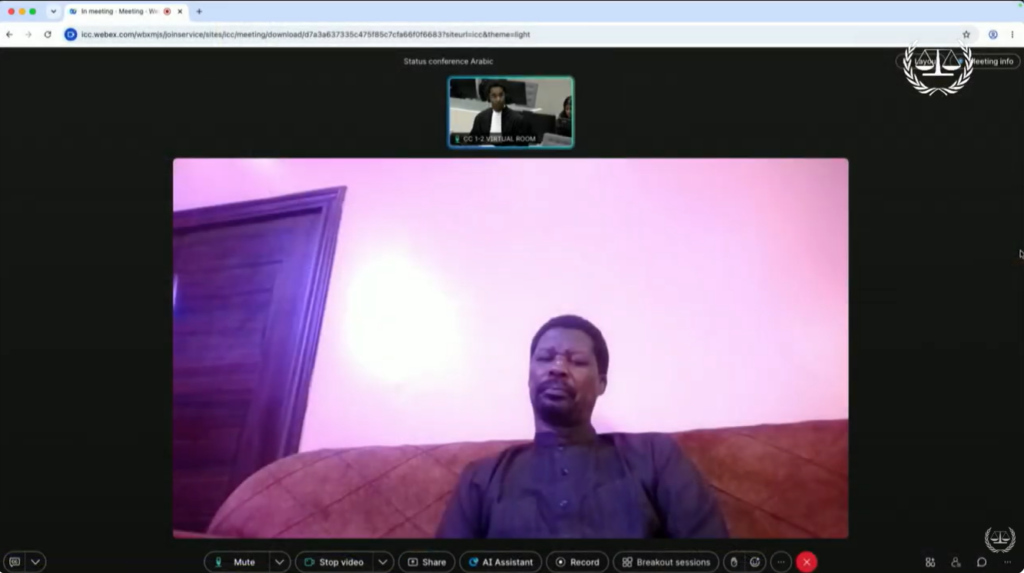
Banda, who had been a fugitive since failing to appear for trial in 2014, followed the hearing by video link from Khartoum. Charges against him were originally confirmed by the Pre-Trial Chamber in 2011 over the 2007 attack on the African Union Mission in Sudan (AMIS) base at Haskanita, in which peacekeepers were killed.
Why the prosecution withdrew the case
Prosecutors told the Chamber the case had deteriorated significantly since confirmation. Two witnesses central to establishing Banda’s knowledge of the unlawful nature of the attack, identified as P441 and P477, were dropped after credibility concerns emerged; P441 was found to have engaged in dishonest conduct, and P477 later refused to continue cooperating with the Office.
A later witness, P512, provided an account that further undercut the prosecution’s original theory, describing attackers actively searching for a Sudanese government representative inside the base rather than avoiding him, weakening the inference underpinning the charges.
The Office said it conducted extensive efforts to fill these evidentiary gaps, including an internal review completed in March 2023 and an independent external review in September 2023, both of which concluded that a conviction was unlikely. Two additional witnesses interviewed in late 2025 also failed to provide evidence capable of restoring the case.
A contested decision
The Chamber twice rejected the prosecution’s requests to withdraw the charges, in October 2023 and again in March 2024, citing among other reasons that Banda remained a fugitive. The prosecution renewed its request in November 2025 after assessing that Banda’s appearance before the Court was becoming more likely, arguing that compelling him to stand trial once it had already concluded the evidence could not sustain a conviction would be unjust to both the accused and to victims. The Chamber authorized the withdrawal in June 2026, without prejudice to future proceedings on the same or similar facts.
Reaction from victims’ representatives
Legal representatives for victims told the Chamber that the withdrawal represents more than a procedural matter for their clients, describing it as the potential end of nearly two decades of waiting for justice. They invoked the principle of “the right to have rights,” arguing that victims had placed their trust in the ICC as an institution that would recognize their suffering when domestic mechanisms failed them.
The prosecution, for its part, stressed that the withdrawal does not diminish the seriousness of the alleged crimes or the suffering of victims, and noted that its broader work on Darfur, including ongoing investigations into current crimes and other pending cases, continues.
DNHR Position
DNHR recognizes the prosecution’s obligation to proceed only where the evidence can sustain a conviction, and understands that maintaining a case built on unreliable testimony would not serve justice. At the same time, DNHR shares the concern raised by victims’ representatives that withdrawal after 19 years risks compounding the sense of abandonment already felt by Darfuri communities awaiting accountability. DNHR notes that the withdrawal is without prejudice to future charges, and calls on the Office of the Prosecutor to pursue new evidence vigorously, particularly given its recently reported progress in linking other Darfur crimes to senior perpetrators.
About DNHR
The Darfur Network for Human Rights (DNHR) documents human rights violations in Darfur and across Sudan, and advocates for accountability and civilian protection through engagement with UN and African human rights mechanisms.