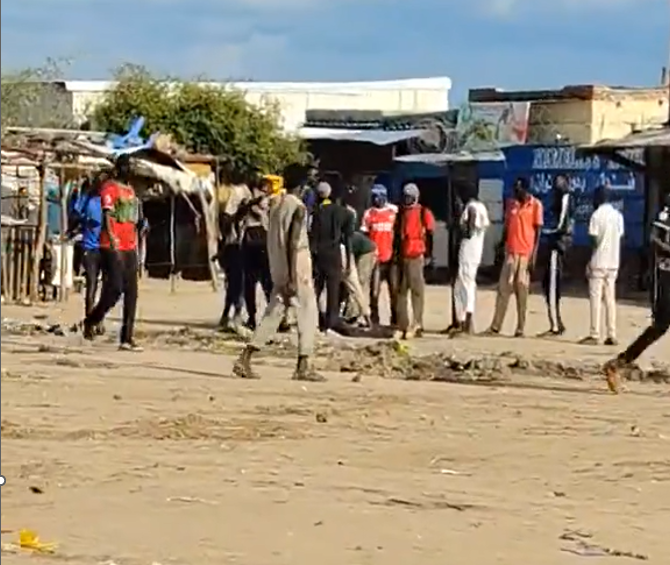
Violent armed clashes at Al-Naam border market, near Abyei, reportedly killed and injured civilians on Tuesday, 15 September. The fighting also forced traders and families to flee, brought commercial activity to a halt and exposed the market to looting.
Al-Naam is a major trading point between Sudan and South Sudan. Violence at the market therefore threatens not only those present during the clashes, but also communities across western Sudan that depend on it for food, fuel, medicine and other essential goods.
Conflicting Accounts of How the Violence Began
Local accounts indicate that the violence began with a dispute involving individuals at the market before escalating into sustained gunfire. Witnesses reported the use of machine guns and other heavy weapons.
Accounts of the parties involved remain disputed. Radio Tamazuj reported clashes involving members of the Ngok Dinka and Misseriya communities. Other reports, citing the Dar Hamar Emergency Room, described the violence as fighting among armed elements affiliated with the Rapid Support Forces.
The affiliations of those involved and the sequence of events could not be independently verified. No collective responsibility should be assigned to any community without credible evidence establishing individual and command responsibility.
Casualty Figures Remain Unverified
Casualty estimates differ significantly. Ngok Dinka Paramount Chief Bulabek Deng Koul said that nine deaths had been confirmed. Abyei Information Minister Yohana Akol reported that 63 Ngok Dinka patients were receiving treatment at a Médecins Sans Frontières hospital.
The Dar Hamar Emergency Room issued a substantially higher estimate, reporting 40 people killed and 57 injured.
These figures have not been reconciled or independently confirmed. Restricted access, insecurity and poor telecommunications have made it difficult to establish the full number and identities of those killed or injured. Information is also incomplete from all affected communities.
Civilians Flee as Shops Are Looted
The gunfire caused panic throughout the market. Traders closed their shops, vehicles left the area and civilian families sought safety elsewhere. Local accounts also alleged that shops and private property were looted during the breakdown in security. The scale of the losses remains unknown.
The violence endangered civilians who had no part in the fighting and obstructed access to livelihoods, medical care and essential supplies. Reports that some injured people faced difficulties reaching treatment require urgent investigation.
All armed actors must protect civilians, allow the wounded to obtain medical care and refrain from looting or damaging civilian property. Authorities and security personnel responsible for the area must also take effective measures to prevent retaliatory attacks and further abuses.
Violence Disrupts a Critical Supply Route
Al-Naam Market lies approximately 10 to 15 kilometres north of Abyei and serves communities on both sides of the Sudan-South Sudan border. Its supply routes reach parts of West and South Kordofan, East and South Darfur, Abyei, Unity, Warrap, Northern Bahr el Ghazal and Western Bahr el Ghazal.
The market has become increasingly important as Sudan’s nationwide war has disrupted established trade routes. Goods, fuel and medicine arriving through South Sudan and other East African countries pass through the market before reaching communities across western Sudan.
The suspension of trade and transport could therefore deepen shortages and raise prices far beyond the immediate area. Reports of fuel price increases in East Darfur should be monitored and independently verified.
Calm Remains Fragile
Local reports indicated that a cautious calm had returned by Wednesday morning and that some traders and residents had begun to return. Community leaders and traditional authorities were reportedly attempting to prevent further escalation and assess the losses.
The United Nations Interim Security Force for Abyei is deployed in the area to protect civilians and support security. However, initial reports that it intervened in this incident could not be independently confirmed. The mission was not immediately available for comment in early reporting.
The situation remains volatile because weapons are widely available and several armed groups operate in and around the area. Poor communications and difficult weather conditions are also hindering efforts to gather reliable information.
Protection and Accountability Are Urgently Needed
The killings, injuries, alleged looting and displacement of civilians require a prompt, independent and transparent investigation. That investigation should establish how the violence began, identify those responsible for unlawful acts and examine whether any actors failed to protect civilians or facilitate medical assistance.
DNHR calls on all parties and authorities operating in the area to protect civilians, secure safe access to medical care and prevent retaliation. Community affiliation must not be used to justify collective blame, discriminatory restrictions or further violence.
Immediate steps are also needed to restore safe civilian access to the market and protect the movement of essential goods. Without accountability and credible measures to prevent renewed clashes, an individual dispute risks fuelling broader violence and further harming communities that depend on Al-Naam for survival.