November 2, 2026
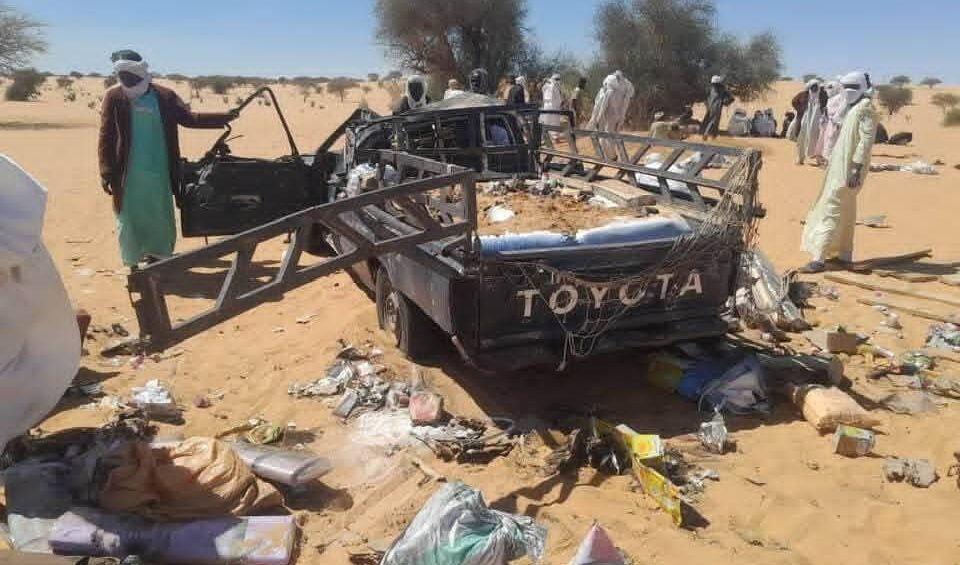
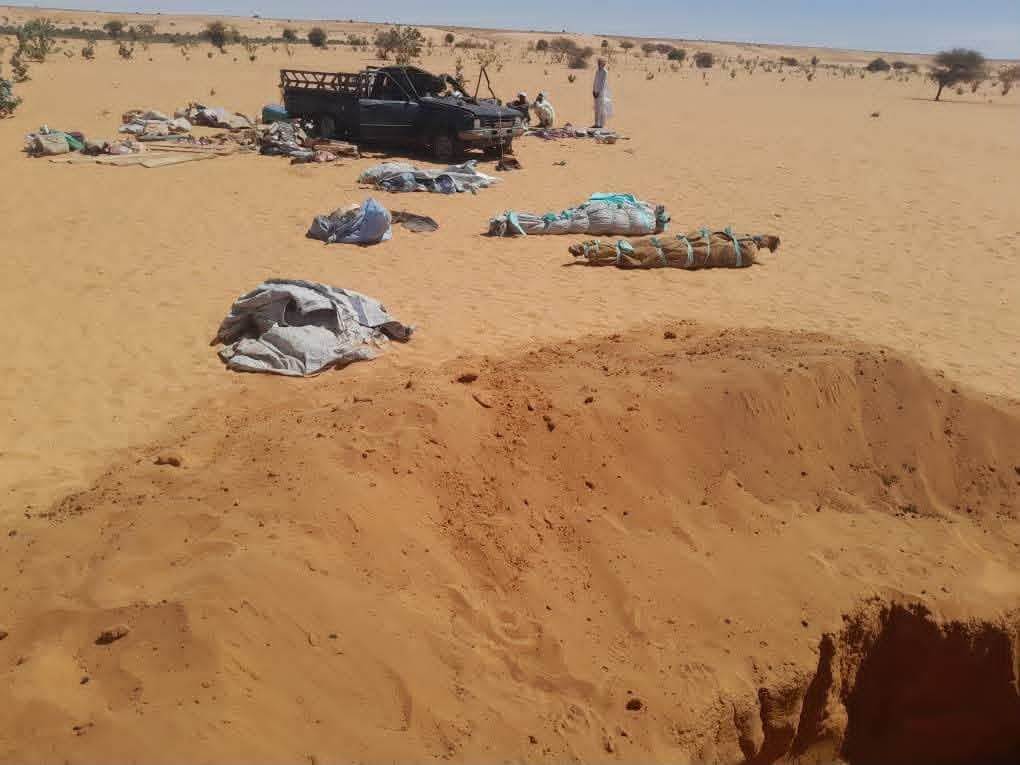
A drone strike killed two civilians when it hit a commercial vehicle carrying passengers and goods in Al Malha locality, North Darfur, on November 1. DNHR field monitors reported the incident, shared supporting evidence, and confirmed the identities of both victims.
The attack occurred in Wadi Majrur near Al Hara, approximately 210 kilometers northeast of El Fasher.
What happened in Al Malha
DNHR monitors identified those killed as trader Mohammed Musa Bakheet Takras and driver Ali Ismail Abkar.
Available accounts indicate that the strike occurred at approximately 2 p.m. Sudan time. The vehicle was transporting civilians toward a weekly market. Reports also mentioned other unidentified victims, but their condition and any additional casualties remain unconfirmed.
Local accounts attributed the Al Malha drone strike to the Sudanese Armed Forces (SAF). However, the information confirmed by DNHR’s monitors does not independently establish who operated the drone.Al Malha is under the control of the Rapid Support Forces (RSF) and lies near the Libyan border.


Risks to civilian travel and trade
Commercial vehicles connect communities with markets, essential goods, and sources of income. Traders and drivers depend on these routes for their livelihoods, while passengers use them to reach services and neighboring communities.
Attacks affecting these journeys endanger lives and can disrupt the supplies that communities rely on. The strike in Al Malha therefore raises concerns about both civilian safety and access to everyday necessities.
Wider civilian harm from drone strikes
The attack comes against a wider backdrop of civilian deaths from drone warfare in Sudan. According to the UN Human Rights Office, drone strikes killed more than 1,000 civilians between January and May 2026. During that period, the office also documented at least 16 drone strikes on health facilities and 33 attacks on markets.
These findings underline the need for all parties to protect civilians when planning and conducting military operations.
Obligations under international humanitarian law
All parties must distinguish between civilians and combatants, and between civilian objects and military objectives. They must also take all feasible precautions to avoid or minimize civilian harm.
A commercial vehicle does not become a lawful target simply because it travels through territory controlled by an opposing force. Its status depends on whether it meets the legal criteria for a military objective.
International humanitarian law prohibits direct attacks on civilians and civilian objects, as well as indiscriminate attacks. It also prohibits attacks expected to cause excessive civilian harm relative to the concrete and direct military advantage anticipated. Assessing this strike requires further information about the intended target and the circumstances of the attack.
DNHR’s position
DNHR expresses concern over the deaths of Mohammed Musa Bakheet Takras and Ali Ismail Abkar. It urges the SAF to respond to accounts attributing the strike to its forces and clarify whether it conducted an operation in the area.
Establishing the full casualty toll remains an immediate priority. Affected families need reliable information about their relatives, and anyone injured must have access to medical care.
DNHR calls on all parties to protect civilian movement and commercial transport across Darfur. People traveling to markets must receive protection, regardless of which party controls the area.
About DNHR
The Darfur Network for Human Rights documents human rights violations in Darfur and across Sudan. It advocates for civilian protection and accountability through engagement with African and international human rights mechanisms.