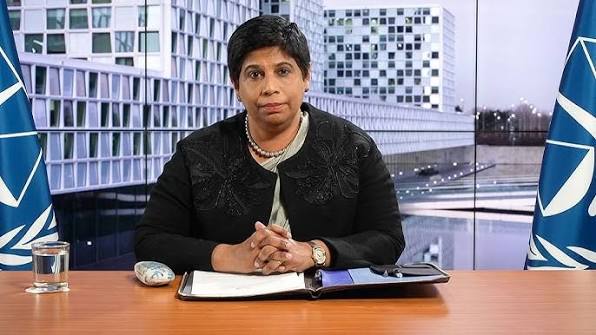
ICC Deputy Prosecutor Nazhat Shameem Khan briefed the UN Security Council this week on the Office of the Prosecutor’s ongoing investigation into Darfur, following a visit to refugee camps in eastern Chad where she met with displaced Darfuris from Adre, Farchana, GozBeida, and several other camps.
Khan told the Council that testimonies gathered during the visit reflected patterns strikingly similar to those that led to the Security Council’s original 2005 referral of Darfur to the ICC: targeted violence against the same communities, using the same methods of humiliation and harm. She said the Office of the Prosecutor now shares the view of the UN Human Rights Office that the most serious international crimes may be imminent in El Obeid, warning that the international community cannot say it did not see this coming.
New evidence and investigative progress
Khan reported that recent witness interviews have allowed investigators to draw a direct line between crimes committed in Darfur and high-level perpetrators, describing the development as a turning point in the investigation. She said the Office has now gathered more than 130 victim interviews alongside satellite imagery, documentary evidence, and digital material, further reinforcing earlier findings that both war crimes and crimes against humanity were committed in El Geneina and El Fasher.
She acknowledged that the investigation continues to face serious constraints, including limited resources, restricted access to Darfur itself, and significant witness protection needs, and noted that measures taken against the ICC have affected the Office’s operations in relation to Darfur.
Cooperation and calls to action
Khan credited expanded partnerships with civil society, the Darfuri diaspora, and the UN Fact-Finding Mission for Sudan for accelerating the investigation, and thanked Chad for its continued cooperation, noting a new framework agreed with Chadian authorities to support investigations into sexual and gender-based crimes. She also noted a positive trajectory in cooperation from Sudan’s government, which has allowed further deployment of ICC teams to Port Sudan.
Khan renewed her call for the Rapid Support Forces to engage with the Office of the Prosecutor, stating that the RSF’s continued lack of cooperation violates the terms of Security Council Resolution 1593. She urged all states to support the investigation, including by facilitating victim and witness interviews on their territory.
DNHR Position
DNHR welcomes the ICC’s continued investigation into Darfur and the direct engagement with victim communities in Chad. The warning that atrocities may be imminent in El Obeid echoes the same signals that preceded past assaults on El Geneina and El Fasher, and should be treated by the international community as an urgent call to prevent, not merely document, further crimes. DNHR renews its call for the RSF to cooperate with the ICC, and for the international community to ensure the Office of the Prosecutor has the resources and access it needs to pursue accountability for Darfur’s victims.
About DNHR
The Darfur Network for Human Rights (DNHR) documents human rights violations in Darfur and across Sudan, and advocates for accountability and civilian protection through engagement with UN and African human rights mechanisms.