November 25, 2026 | International Day for the Elimination of Violence against Women
A home should be a place of safety. A hospital should offer care. A woman fleeing violence should be able to find protection.
Yet for many women and girls in Sudan, safety remains uncertain.
As the world marks the International Day for the Elimination of Violence against Women, the Darfur Network for Human Rights (DNHR) joins the global 16 Days of Activism Against Gender-Based Violence.
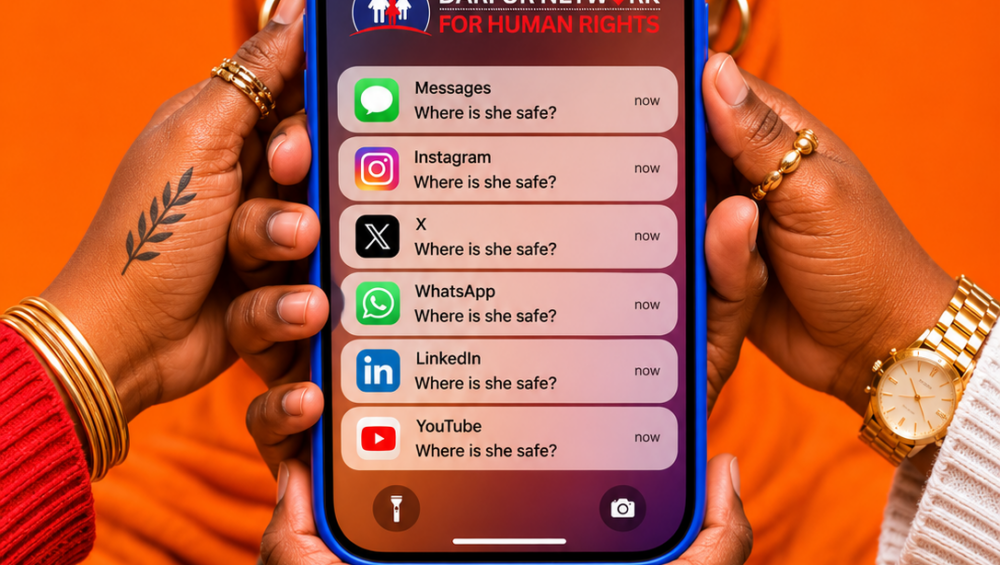
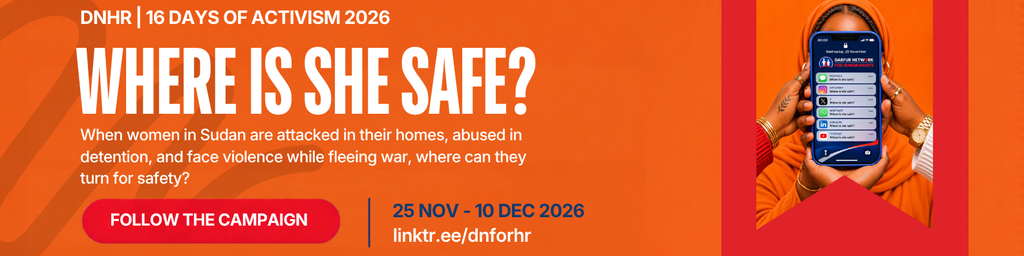
This year, we are going orange with our campaign, “Where Is She Safe?”
From November 25 to December 10, we will highlight the violence women and girls face during Sudan’s ongoing war. We will also examine the challenges they encounter when seeking protection, assistance, and justice.
Violence Against Women and Girls in Sudan: What the Numbers Tell Us
Violence against women and girls remains a serious concern across Sudan.
According to the United Nations Population Fund (UNFPA), 12.7 million people in Sudan are estimated to be at risk of gender-based violence in 2026. Women and girls make up the majority of those at risk.
The United Nations Human Rights Office (OHCHR) has also documented widespread conflict-related sexual violence.
Between April 2023 and mid-April 2026, OHCHR verified 546 incidents of conflict-related sexual violence. The documented victims included at least 539 women and 284 girls.
These figures do not capture the full extent of the violence.
Many survivors face serious barriers to reporting abuse. Fear of retaliation, insecurity, stigma, and limited access to support services can prevent women from speaking about their experiences.
Beyond Sexual Violence: The Different Forms of Abuse Women Face
Sexual violence is a major concern, but it is not the only form of violence affecting women and girls in Sudan.
Women have been subjected to physical assaults, abduction, intimidation, arbitrary detention, and other forms of abuse.
Some have experienced violence inside their homes. Others have faced threats and attacks while fleeing conflict or seeking refuge.
For women who survive these violations, the consequences can extend far beyond the initial incident.
Violence can force women from their homes, separate families, interrupt access to medical care, and leave survivors facing stigma and insecurity.
Through our monitoring and documentation work, DNHR has recorded serious violations affecting civilians, including women and girls. Our findings highlight the lasting consequences of violence and the difficulties survivors face in seeking justice.
These experiences raise an important question.
Where can women and girls find safety when even the places meant to protect them may expose them to further harm?
Introducing DNHR’s “Where Is She Safe?” Campaign
Throughout the 16 Days of Activism, we will examine the different forms of violence women and girls face in Sudan.
Our campaign will focus on four areas:
- At home: Violence during armed raids, physical assaults, threats, and domestic abuse.
- In places of safety: Risks faced in hospitals, schools, checkpoints, and other places where women seek care or protection.
- In detention: Arbitrary arrest, physical abuse, intimidation, and violations of women’s rights.
- During displacement: Violence along escape routes and the protection challenges women face in places of refuge.
We will share documented incidents, factsheets, research findings, and perspectives from Sudanese women working in human rights and advocacy.
Through these contributions, we hope to make the experiences of women in Sudan better understood. We also want to draw attention to violations that often receive limited public discussion.
Why Protection, Justice, and Accountability Matter
Violence against women and girls must never be accepted as an unavoidable consequence of war.
Women have the right to safety, dignity, and protection from abuse. These rights do not disappear during armed conflict.
Survivors must be able to seek medical care, psychosocial support, and other essential services without fear or discrimination.
Serious violations must also be documented and investigated. Those responsible must be held accountable through credible justice processes.
At DNHR, we believe that protecting women and girls requires continued attention to their experiences, their rights, and the barriers they face.
Join DNHR’s 16 Days of Activism Campaign
From November 25 to December 10, DNHR is going orange in solidarity with women and girls affected by violence in Sudan.
We invite journalists, civil society organizations, human rights advocates, and the wider public to follow the campaign.
Read the evidence. Listen to women’s perspectives. Share verified information and help keep the conversation about women’s safety, protection, and justice going.
Women and girls deserve to live without violence. War does not take away that right.
Follow #WhereIsSheSafe throughout the 16 Days of Activism.